Every year, the world produces around 3,300 tonnes of gold — and the majority of it is extracted through methods that devastate ecosystems, displace communities, and expose workers to mercury and cyanide. Fast jewellery has brought us affordable pieces at the cost of something far greater.
The scale of the problem
The rise of fast fashion's jewellery equivalent — mass-produced rings, necklaces, and earrings made from untraced metals — has made beautiful accessories accessible to millions. But behind the gleam of a £9 ring lies a supply chain that most brands would rather you never examined.
Artisanal and small-scale gold mining (ASGM) accounts for roughly 20% of global gold supply and is the world's largest source of mercury pollution. Entire river systems in the Amazon and West Africa have been contaminated — and the communities who depend on them bear the consequences for generations.
"The most radical thing a jewellery brand can do is be completely honest about where its gold comes from."
— Uyanda Nkosi, Ethical Jewellery ResearcherWhat ethical gold really means
Not all gold certifications are equal. When we at Giftique source jewellery, we look for partners who hold either Fairmined or Fairtrade Gold certification — the only two standards that directly verify mine-level social and environmental practices.
These certifications guarantee that miners receive a fair minimum price plus a premium, that no child labour is used, that mercury is managed safely, and that women have equal rights and opportunities within the mining community. It is, in short, gold you can feel good about wearing.
Sourced from organisations of artisanal miners who meet strict social, environmental and labour standards.
Using gold and silver already in circulation — from old jewellery, electronics and industrial scrap — requires no new mining.
Chemically identical to mined stones but created without the environmental and human rights risks of extraction.
The artisans behind the pieces
Last autumn, our buying team visited three of our partner workshops — in Jaipur, Medellín, and a small coastal town in Kerala. What struck us wasn't just the craft (though it was extraordinary) — it was the dignity with which these artisans spoke about their work.
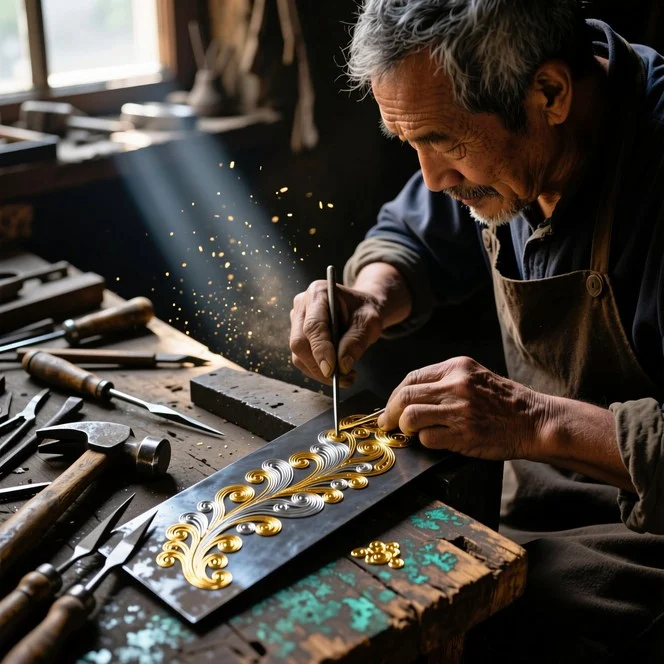
In Jaipur, master enamellers work with techniques passed down over 500 years. The meenakari process — where intricate patterns are inlaid with coloured enamels into gold — takes up to 40 hours per piece. These are not mass-produced items. They are heirlooms in waiting.
In Kerala, a women-led cooperative produces intricate filigree silver work for our gift collection. The co-op was founded in 2018 and now supports 34 families. For Giftique, working with them isn't charity — it's simply finding the most skilled craftspeople in the world and paying them fairly for their art.
How to shop consciously
You don't need a degree in supply chain ethics to make better jewellery choices. Here are the questions worth asking before any purchase:
- Where is the metal from? Look for Fairmined or Fairtrade Gold certification, or recycled/upcycled metals.
- Where are the stones from? Ask whether gemstones are lab-grown, ethically mined, or traceable to a specific origin.
- Who made this? Brands that genuinely know their makers will tell you — with pride, and usually with photos.
- How is it packaged? Ethical jewellery brands should match their values all the way to the unboxing moment.
- What happens if it tarnishes? Quality ethical jewellery is made to last and often comes with repair or remake guarantees.
Every jewellery piece in our collection is accompanied by a provenance card detailing the maker, the metal source, and the gemstone origin. No exceptions.
Our favourite ethical pieces right now
From delicate everyday pieces to statement gifts for someone truly special, these are the jewellery pieces our editors reach for first — and the stories behind why they matter.